

ICJ Kenya Hosts Forum on Data Centres, Water Scarcity and Human Rights
Data centres, water scarcity and human rights took centre stage during a public forum hosted by the International Commission of Jurists – Kenyan Section (ICJ Kenya) in partnership with the Raoul Wallenberg Institute of Human Rights and Humanitarian Law (RWI) and the Norwegian Agency for Exchange Cooperation (NOREC).
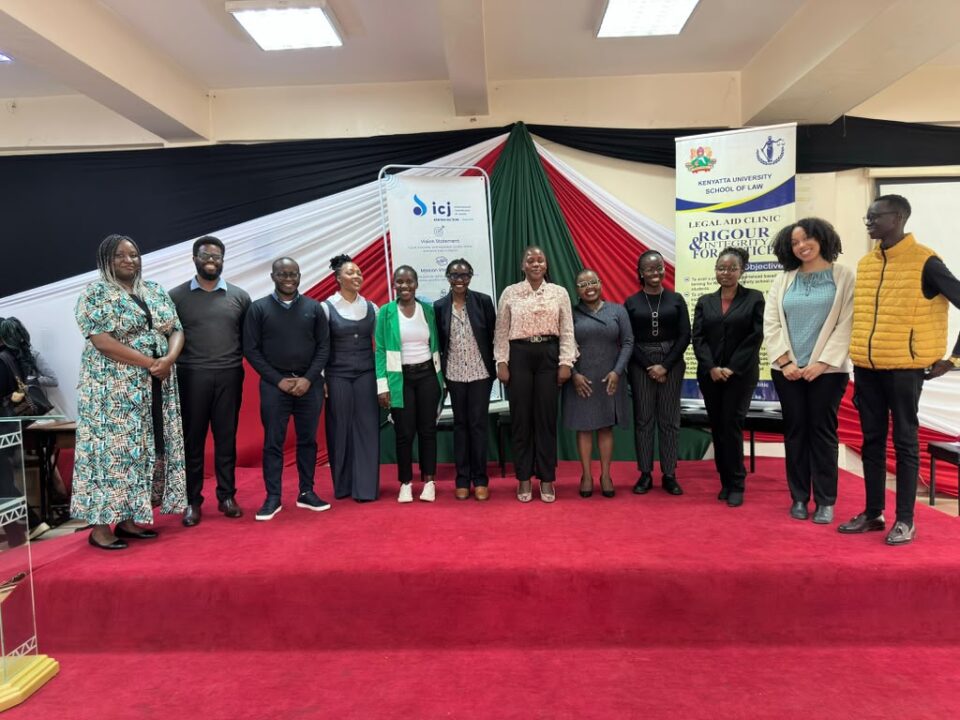
Held on 1 July 2026 at the Kenyatta University School of Law, the forum brought together students, legal practitioners, academics and environmental experts to examine the growing impact of digital infrastructure on climate change, water governance and human rights. As Africa experiences increased investment in data centres, participants discussed how technological advancement can be balanced with environmental sustainability and responsible governance.
Data Centres and Water Scarcity in Kenya
The event began with opening remarks from representatives of Kenyatta University School of Law, ICJ Kenya and the Raoul Wallenberg Institute before participants received an overview of the environmental footprint of data centres. The presentation highlighted concerns over rising energy and water consumption and their implications for climate resilience, water security and the protection of human rights.
Speakers emphasized that while data centres are essential for supporting digital transformation and economic growth, they also present significant environmental challenges that require sustainable planning and effective regulation.
Read Also: Smart Water Management in Kenya: Liquid Partners with DropByDrop
Experts Discuss Climate Change and Human Rights
A panel discussion explored four key areas: the role of data centres and digital infrastructure, legal and policy frameworks governing water rights, technological innovation in addressing environmental challenges, and environmental governance in the digital era.
The panel featured experts from legal, academic and environmental backgrounds.
Keamogetse Motsage, a Legal Research Fellow at ICJ Kenya under the NOREC Programme, discussed the rapid expansion of data centres and their implications for climate justice and governance.
Florence Kubaza, Programmes Officer and Fellow at ICJ Kenya, examined Kenya’s legal and policy framework on water rights, highlighting the relationship between climate change, environmental governance and human rights.
Dr. Ivy Gikonyo, Manager of the Expression, Information and Digital Rights Unit at the Centre for Human Rights, University of Pretoria, shared insights on how emerging technologies can promote sustainable development while protecting fundamental rights.
Irene Asuwa, a social scientist specializing in ecological justice and water governance, concluded the panel by discussing equitable management of natural resources and the importance of community engagement in environmental governance.
Forum Calls for Sustainable Digital Development
The event concluded with an interactive question-and-answer session where participants emphasized the need for collaborative, rights-based approaches to digital development, environmental protection and climate governance.
Organizers noted that such forums provide important platforms for young people to engage in emerging policy discussions surrounding technology, environmental sustainability and human rights.
ICJ Kenya also acknowledged the contributions of Juliet Muita, who served as the event’s master of ceremonies, and Steve Kamaara, who coordinated the programme alongside the Kenyatta University School of Law.
The organization expressed appreciation to the Raoul Wallenberg Institute, NOREC, Kenyatta University School of Law, moderators, panelists and participants for supporting dialogue on the future of digital infrastructure and sustainable resource management.
