

Partnership with Davis & Shirtliff highlights solar pumping, borehole technology and efficient water infrastructure
The Tana Water Works Development Agency (TWWDA) is promoting the adoption of sustainable water technologies as Kenya’s water sector seeks more efficient and resilient approaches to expanding access to reliable water supplies.
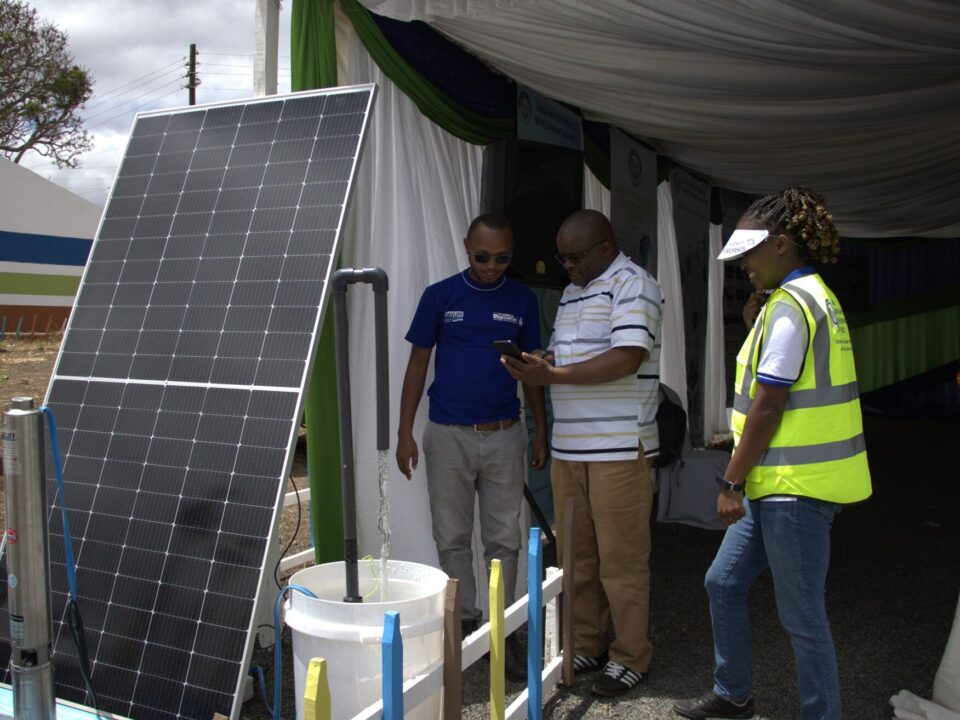
The agency partnered with water technology company Davis & Shirtliff at the ASK Central Kenya Show, where the two organisations showcased technologies designed to improve water supply while reducing energy costs and supporting the transition towards cleaner energy sources.
The exhibition provided an opportunity for members of the public, water professionals and other stakeholders to interact with the technologies and observe demonstrations of selected water systems.
Solar power gains ground in water supply
Among the solutions showcased were borehole pumping systems and solar-powered water technologies.
Solar pumping is increasingly attracting attention within the water sector because it can reduce reliance on conventional electricity, particularly in areas where grid power is unavailable, unreliable or expensive.
For communities and water service providers, the use of solar energy can potentially reduce recurring energy expenditure while providing a more dependable source of power for pumping and water distribution.
The approach is particularly relevant in rural and remote areas where extending electricity infrastructure can be costly.
Technology for sustainable groundwater development
Borehole technology also provides an important option for accessing groundwater where suitable aquifers are available and abstraction can be sustainably managed.
However, groundwater development requires careful assessment of aquifer characteristics, water quality and sustainable abstraction levels. Technology therefore needs to be supported by appropriate planning, monitoring and management to ensure that increased access today does not compromise groundwater resources in the future.
For TWWDA, promoting modern pumping and water-supply technologies forms part of its wider mandate to develop water infrastructure within its area of jurisdiction. The agency covers Kirinyaga, Nyeri, Meru, Embu and Tharaka Nithi counties.
Linking innovation with water-sector needs
The ASK Central Kenya Show also demonstrated the value of bringing public-sector water institutions and private technology providers together.
Such partnerships can create opportunities for sharing technical expertise, demonstrating new equipment and helping communities and institutions understand how emerging technologies can be applied to practical water challenges.
As water demand increases and climate variability places additional pressure on available resources, the sector is increasingly looking at solutions that combine water efficiency, renewable energy and resilient infrastructure.
TWWDA has previously incorporated green-energy approaches into borehole projects, while government reporting has also highlighted the agency’s work on environmental assessments, water-resource studies and catchment conservation.
Moving towards energy-efficient water systems
Energy is a significant consideration in water supply because pumping and treatment can account for substantial operating costs.
Integrating renewable energy into water infrastructure can therefore contribute to lower operating costs while reducing the carbon footprint associated with water services.
The wider opportunity lies in designing water systems where energy efficiency is considered from the planning stage rather than added later. Solar pumping, efficient pumps, appropriate storage and well-designed distribution networks can work together to improve the overall performance of water systems.
Partnerships for a sustainable future
The TWWDA-Davis & Shirtliff collaboration highlights the role that public-private partnerships can play in accelerating the uptake of practical water technologies.
For Kenya’s water sector, the challenge is not simply to develop more infrastructure, but to ensure that new systems are technically appropriate, financially viable, environmentally responsible and capable of delivering services over the long term.
As investment in water infrastructure continues across East Africa, greater adoption of renewable energy, efficient pumping technologies and sustainable groundwater management could become an increasingly important part of building resilient water services.
TWWDA’s engagement at the ASK Central Kenya Show provides another platform for demonstrating how technology and collaboration can contribute to that transition.
